Altera 5SGXMA7K1F35C2LG
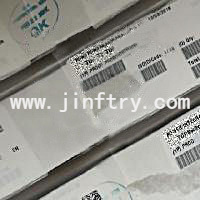
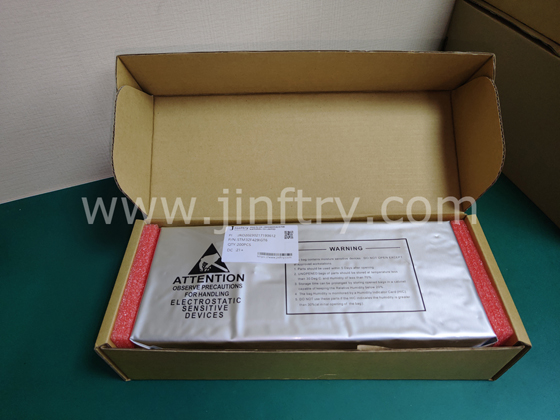
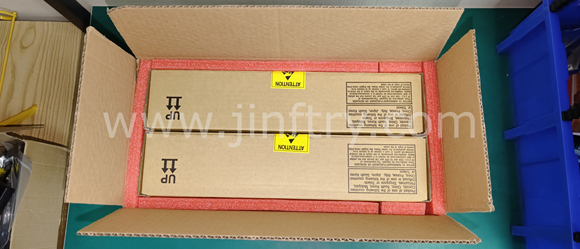
The picture is for reference only, please refer to the product specification
- 5SGXMA7K1F35C2LG
- Altera
- IC FPGA 432 I/O 1152FBGA
- Embedded - FPGAs (Field Programmable Gate Array)
- 5SGXMA7K1F35C2LG Datasheet
- 1152-BBGA, FCBGA
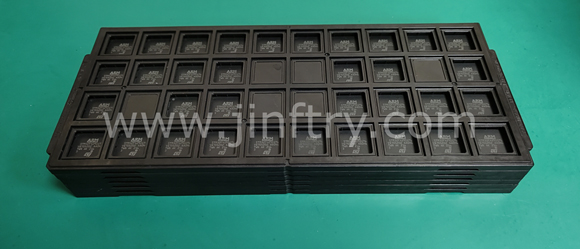
- Tray
-
 Lead free / RoHS Compliant
 - 19425
- Spot Inventory / Athorized Dstributor / Factory Excess Stock
- 1 year quality assurance 》
- Click to get rates


What is 5SGXMA7K1F35C2LG
Altera Part Number 5SGXMA7K1F35C2LG(Embedded - FPGAs (Field Programmable Gate Array)), developed and manufactured by Altera, distributed globally by Jinftry. We distribute various electronic components from world-renowned brands and provide one-stop services, making us a trusted global electronic component distributor.
5SGXMA7K1F35C2LG is one of the part numbers distributed by Jinftry, and you can learn about its specifications/configurations, package/case, Datasheet, and other information here. Electronic components are affected by supply and demand, and prices fluctuate frequently. If you have a demand, please do not hesitate to send us an RFQ or email us immediately [email protected] Please inquire about the real-time unit price, Data Code, Lead time, payment terms, and any other information you would like to know. We will do our best to provide you with a quotation and reply as soon as possible.
5SGXMA7K1F35C2LG Specifications
- Part Number5SGXMA7K1F35C2LG
- CategoryEmbedded - FPGAs (Field Programmable Gate Array)
- ManufacturerAltera
- DescriptionIC FPGA 432 I/O 1152FBGA
- PackageTray
- SeriesStratix® V GX
- Voltage - Supply0.82V ~ 0.88V
- Operating Temperature0°C ~ 85°C (TJ)
- Mounting TypeSurface Mount
- Package / Case1152-BBGA, FCBGA
- Supplier Device Package1152-FBGA (35x35)
- Number of I/O432
- Number of Gates-
- Number of LABs/CLBs234720
- Number of Logic Elements/Cells622000
- Total RAM Bits51200000
Application of 5SGXMA7K1F35C2LG
5SGXMA7K1F35C2LG Datasheet
5SGXMA7K1F35C2LG Datasheet , Tray,Stratix® V GX,0.82V ~ 0.88V,0°C ~ 85°C (TJ),Surface Mount,1152-BBGA, FCBGA,1152-FBGA (35x35),432,234720,622000,51200000
5SGXMA7K1F35C2LG Classification
Embedded - FPGAs (Field Programmable Gate Array)
FAQ about Embedded - FPGAs (Field Programmable Gate Array)
-
1. Is FPGA a controller or a processor?
FPGA is a programmable integrated circuit. It is neither a traditional controller nor a traditional processor, but a device between the two. FPGAs are programmed with hardware description languages and can customize circuits according to requirements, making them suitable for application scenarios that require flexible configuration and high performance.
The difference between FPGAs and microcontrollers (MCUs) and central processing units (CPUs) lies in their flexibility and application scenarios. MCUs and CPUs are usually microcontrollers and processors with preset functions, suitable for environments that perform single tasks and require efficient execution. FPGAs, on the other hand, have higher flexibility and reconfigurability, can be programmed and reprogrammed according to specific applications, and are suitable for applications that require high customization and optimized performance.
The advantages of FPGAs include their high flexibility and reconfigurability, which makes them ideal for applications that require frequent updates or optimization of logic. Compared with application-specific integrated circuits (ASICs), FPGAs do not require permanent design fixes on silicon, so new features can be developed and tested or bugs can be fixed more quickly.
-
2. Is FPGA faster than CPU?
FPGAs are faster than CPUs in some cases. FPGAs are programmable hardware devices whose internal architecture can be configured by users as needed, which enables them to process multiple computing tasks in parallel, resulting in higher computing performance in some scenarios.
FPGAs and CPUs have different architectures and design goals. CPUs are general-purpose processors that can perform a variety of tasks, but may require multiple clock cycles to process specific operations. FPGAs, on the other hand, achieve specific computing structures by reorganizing circuits, and have higher parallelism and efficiency. For example, when processing specific tasks such as signals and images, FPGAs can complete them faster than CPUs.
The main advantage of FPGAs is their programmability and flexibility. FPGAs can be reprogrammed and reconfigured as needed, which enables designers to quickly test new and updated algorithms without developing and releasing new hardware, thereby speeding up time to market and saving costs. In addition, FPGAs offer the advantages of superior performance and reduced latency, and are suitable for real-time applications that require low latency and deterministic latency. -
3. Is FPGA a microprocessor?
FPGA is not a microprocessor. FPGA (Field-Programmable Gate Array) is a special digital circuit that is mainly used to implement complex logic functions, while microprocessors are processors used to execute instructions.
FPGA and microprocessors have significant differences in function and use. FPGA is a semi-custom digital circuit that can be programmed during the hardware design stage to implement specific logic functions. FPGA solves the shortcomings of customized circuits and overcomes the shortcomings of the limited number of gate circuits of the original programmable devices. It is suitable for occasions that require highly customized logic functions. In contrast, a microprocessor (such as a CPU) is a general-purpose computing device used to execute instructions stored in it, process data, and perform computing tasks. Microprocessors include MCU (microcontroller), DSP (digital signal processor), etc., each of which has different application scenarios and functional characteristics.
Specifically, FPGA and microprocessor are also different in structure and working mode. FPGA consists of a large number of programmable logic units, and users can program to implement any logic function as needed. Microprocessors contain a central processing unit (CPU), memory, and input and output interfaces to execute predefined instruction sets, process data, and perform computing tasks. In addition, FPGAs are usually used in situations that require high-speed processing and parallel computing, such as communications, image processing, etc., while microprocessors are widely used in various computing devices and systems.
We are a professional PCB manufacturer who offers comprehensive PCB manufacturing services including: professional Ceramic PCB HDI PCB Heavy Copper PCB High-TG PCB High Speed PCB High Frequency PCB Metal Core PCB PCB fabrication and PCB assembly, providing fast turnaround prototypes for high-end products.



• Prompt Responsiveness
• Guaranteed Quality
• Global Access
• Competitive Market Price
• One-Stop support services of supply chain
Jinftry, Your most trustworthy component supplier, welcome to send us the inquiry, thank you!
Do you have any questions about 5SGXMA7K1F35C2LG ?
Feel free to contact us: