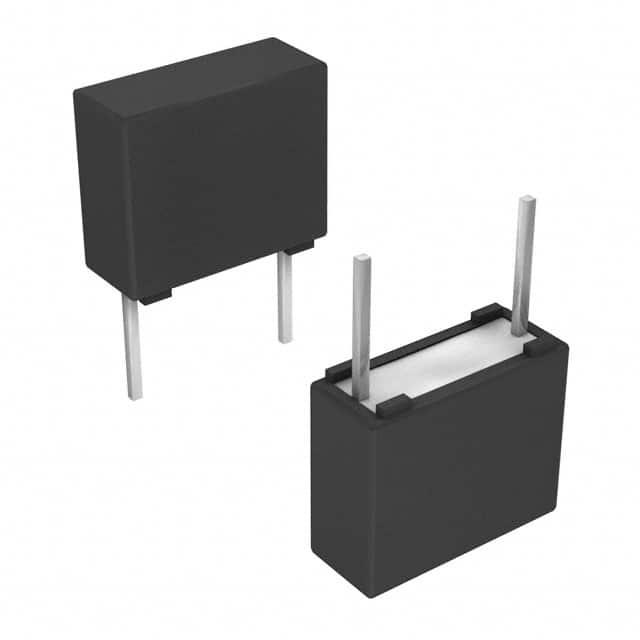
Vishay Beyschlag/Draloric/BC Components F17724682901
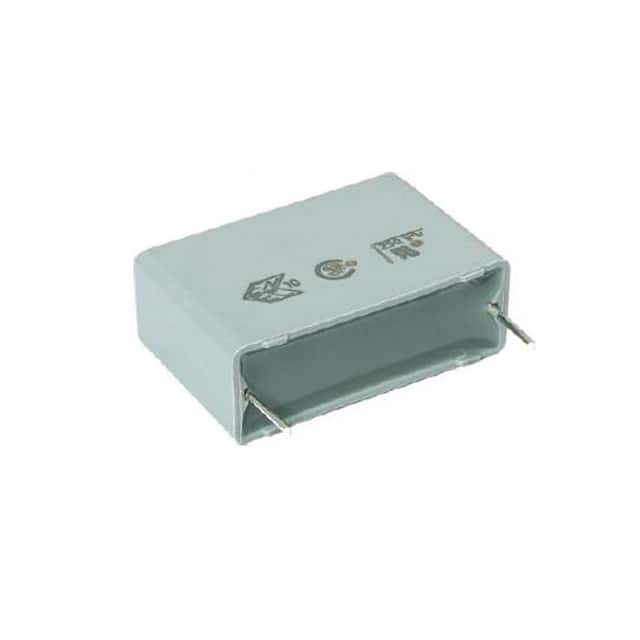
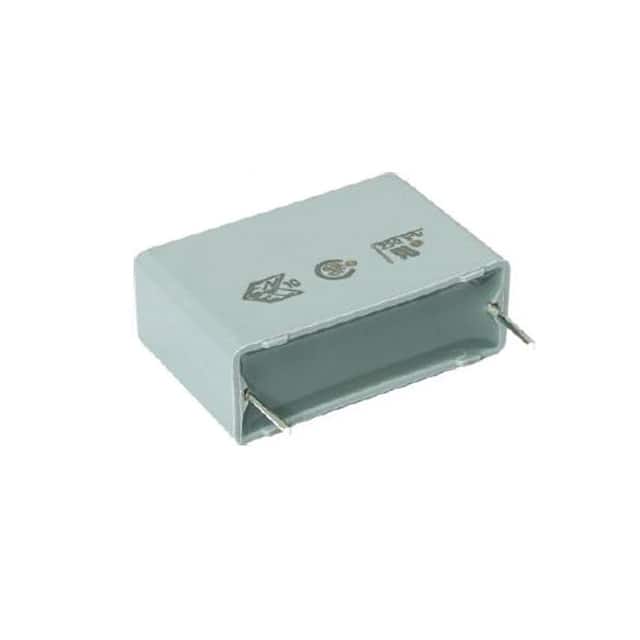
The picture is for reference only, please refer to the product specification
- F17724682901
- Vishay Beyschlag/Draloric/BC Components
- CAP FILM 0.68UF 10% 630VDC RAD
- Film Capacitors
- F17724682901 Datasheet
- Radial
- Tape & Reel (TR)
-
 Lead free / RoHS Compliant
 - 936
- Spot Inventory / Athorized Dstributor / Factory Excess Stock
- 1 year quality assurance 》
- Click to get rates


What is F17724682901
Vishay Beyschlag/Draloric/BC Components Part Number F17724682901(Film Capacitors), developed and manufactured by Vishay Beyschlag/Draloric/BC Components, distributed globally by Jinftry. We distribute various electronic components from world-renowned brands and provide one-stop services, making us a trusted global electronic component distributor.
F17724682901 is one of the part numbers distributed by Jinftry, and you can learn about its specifications/configurations, package/case, Datasheet, and other information here. Electronic components are affected by supply and demand, and prices fluctuate frequently. If you have a demand, please do not hesitate to send us an RFQ or email us immediately [email protected] Please inquire about the real-time unit price, Data Code, Lead time, payment terms, and any other information you would like to know. We will do our best to provide you with a quotation and reply as soon as possible.
F17724682901 Specifications
- Part NumberF17724682901
- CategoryFilm Capacitors
- ManufacturerVishay Beyschlag/Draloric/BC Components
- DescriptionCAP FILM 0.68UF 10% 630VDC RAD
- PackageTape & Reel (TR)
- SeriesF1772
- Features-
- Operating Temperature-40°C ~ 110°C
- Mounting TypeThrough Hole
- Package / CaseRadial
- ApplicationsEMI, RFI Suppression
- Tolerance±10%
- Size / Dimension1.220" L x 0.512" W (31.00mm x 13.00mm)
- TerminationPC Pins
- Voltage Rating - AC310V
- Voltage Rating - DC630V
- Lead Spacing1.083\" (27.50mm)
- RatingsX2
- Height - Seated (Max)0.906\" (23.00mm)
- Capacitance0.68 µF
- ESR (Equivalent Series Resistance)-
- Dielectric MaterialPolyester, Metallized
Application of F17724682901
F17724682901 Datasheet
F17724682901 Datasheet , Tape & Reel (TR),F1772,-40°C ~ 110°C,Through Hole,Radial,EMI, RFI Suppression,±10%,1.220" L x 0.512" W (31.00mm x 13.00mm),PC Pins,310V,630V,1.083\" (27.50mm),X2,0.906\" (23.00mm),0.68 µF,Polyester
F17724682901 Classification
Film Capacitors
FAQ about Film Capacitors
-
1. Are film capacitors better than electrolytic capacitors?
Not necessarily
Film capacitors and electrolytic capacitors each have their own advantages and disadvantages, and the specific choice depends on the application scenario.
Advantages of film capacitors
Non-polarity: Film capacitors are non-polar, and there is no need to distinguish between positive and negative poles, avoiding the risk of capacitor explosion due to reverse connection.
Long life: Film capacitors have significantly longer life and better stability.
Wide temperature range: Film capacitors have a wide operating temperature range, generally -40℃~+105℃/110℃, suitable for various ambient temperatures.
High withstand voltage: Film capacitors can withstand overvoltages higher than 1.5 times the rated voltage in a short period of time, and have strong withstand voltage.
Low loss: Film capacitors have low loss and are suitable for high-frequency circuits, especially for occasions requiring low loss and high-frequency applications.
Advantages of electrolytic capacitors
Large capacity: Electrolytic capacitors usually have large capacitance and are suitable for occasions requiring large amounts of energy storage.
Low cost: The cost of electrolytic capacitors is relatively low, suitable for occasions with strict cost requirements.
High energy density: Electrolytic capacitors are a strong choice when cost-effective, high-capacity energy storage is required, especially when maintaining DC output voltage during power outages.
-
2. How do film capacitors fail?
High working environment temperature, improper selection of working current, exceeding the specified working voltage, harmonic current
The main reasons for film capacitor failure include the following:
High working environment temperature: Film capacitors can work normally in a temperature environment of -40℃~+105℃, but exceeding this range will accelerate thermal aging, resulting in a shortened service life, and even bursting in severe cases.
Improper selection of working current: The current value in the circuit should be less than the current value allowed by the film capacitor, otherwise it will cause the capacitor to heat up, and long-term use will shorten the life, and even burst in severe cases.
Exceeding the specified working voltage: Excessive voltage will cause partial discharge, which will then break down the capacitor and cannot be used.
There are harmonic currents: high-order harmonic currents are superimposed on fundamental currents, resulting in an increase in total current, causing capacitor load overload, internal expansion, and explosion.
Buying inferior capacitors: In order to reduce costs, some manufacturers on the market use low-quality materials to produce capacitors, which greatly reduces the actual withstand voltage and life of such capacitors.
The structural characteristics of film capacitors and the impact of the use environment on their performance:
Film capacitors are usually composed of polypropylene film, aluminum foil and plastic shell. Polypropylene film is sensitive to high temperature, which accelerates its aging and shortens the life of the capacitor. In addition, a humid environment will also cause water vapor to enter the capacitor, affecting its performance.
-
3. What is the difference between foil capacitors and film capacitors?
Electrode materials, structure, and application areas
The main difference between foil capacitors and film capacitors lies in electrode materials, structures, and application areas.
Electrode materials and structures
Foil capacitors: Foil capacitors usually use metal foil as electrodes. This electrode is formed on a plastic film by vacuum evaporation, which is called a metallized film. This structure can save the thickness of the electrode foil, thereby reducing the volume of the capacitor and making it more miniaturized.
Film capacitors: Film capacitors use plastic films as dielectrics. Common plastic films include polyethylene, polypropylene, polystyrene or polycarbonate. These films overlap at both ends and are rolled into a cylinder to form a capacitor.
We are a professional PCB manufacturer who offers comprehensive PCB manufacturing services including: professional Ceramic PCB HDI PCB Heavy Copper PCB High-TG PCB High Speed PCB High Frequency PCB Metal Core PCB PCB fabrication and PCB assembly, providing fast turnaround prototypes for high-end products.



• Prompt Responsiveness
• Guaranteed Quality
• Global Access
• Competitive Market Price
• One-Stop support services of supply chain
Jinftry, Your most trustworthy component supplier, welcome to send us the inquiry, thank you!
Do you have any questions about F17724682901 ?
Feel free to contact us:
F17724682901 Related Products

CAP FILM 0.022UF 5% 1.6KVDC RAD

CAP FILM 0.02UF 5% 1.4KVDC RAD

CAP FILM 0.013UF 5% 1000VDC RAD
CAP FILM 0.013UF 5% 1000VDC RAD

CAP FILM 0.033UF 5% 630VDC RAD
CAP FILM 0.68UF 10% 630VDC RAD

CAP FILM 0.39UF 5% 250VDC RADIAL
CAP FILM 0.56UF 2% 63VDC RADIAL

CAP FILM 0.033UF 5% 1.6KVDC RAD
CAP FILM 0.18UF 5% 400VDC RADIAL