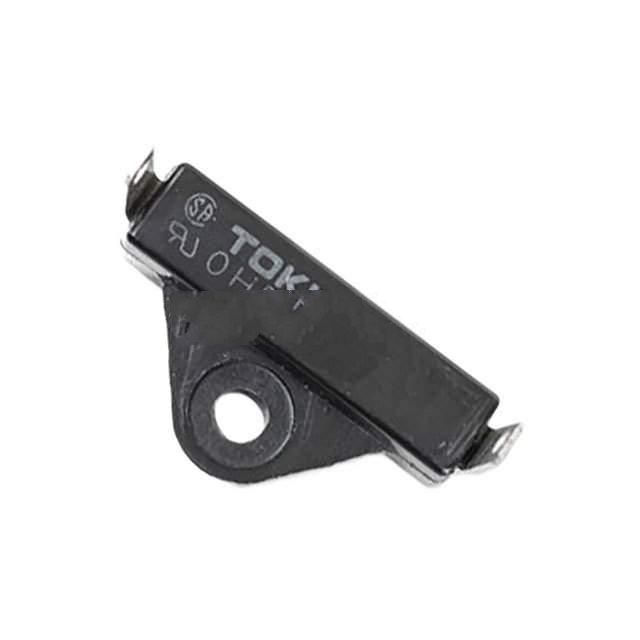
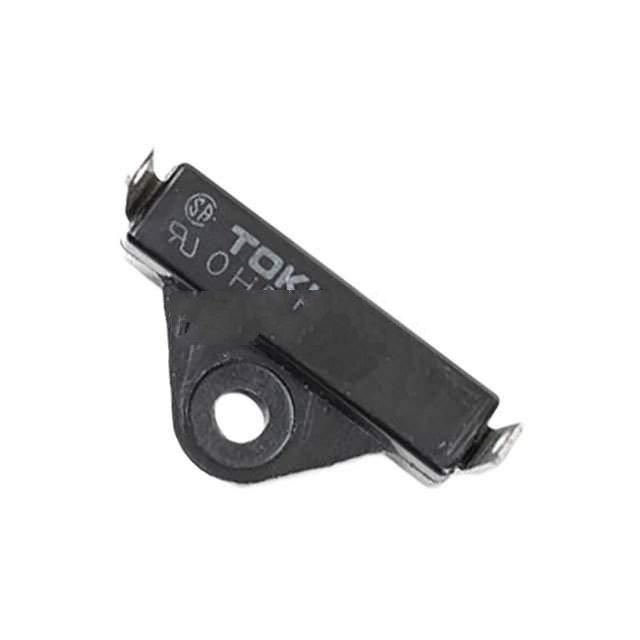
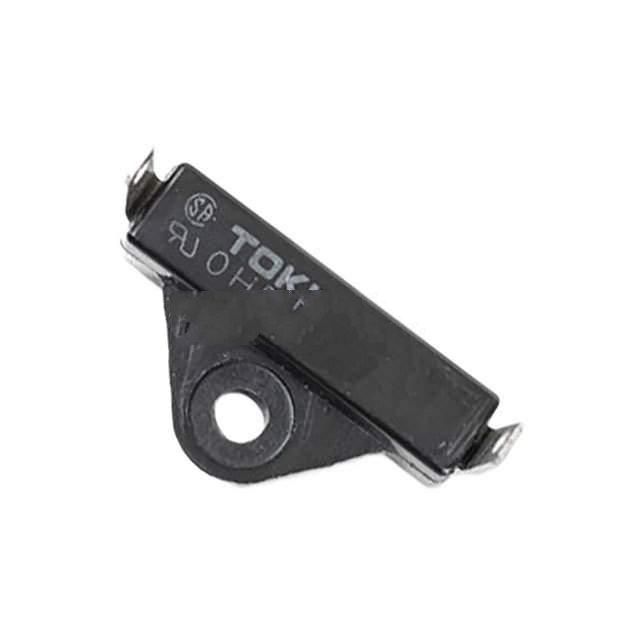
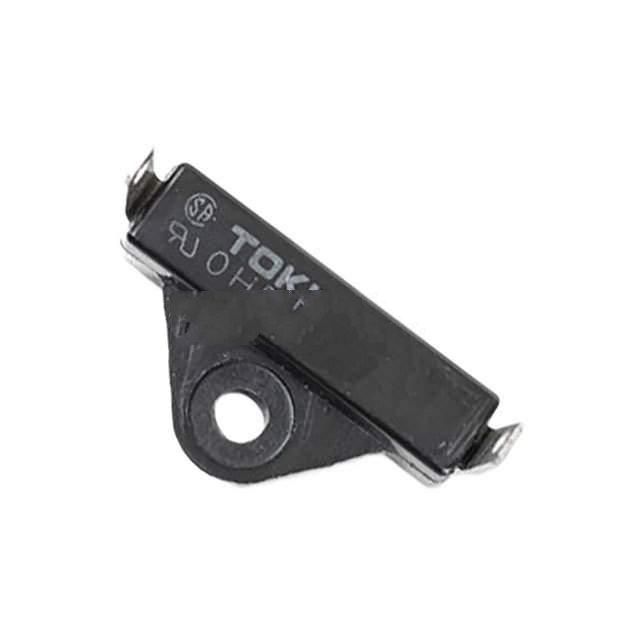
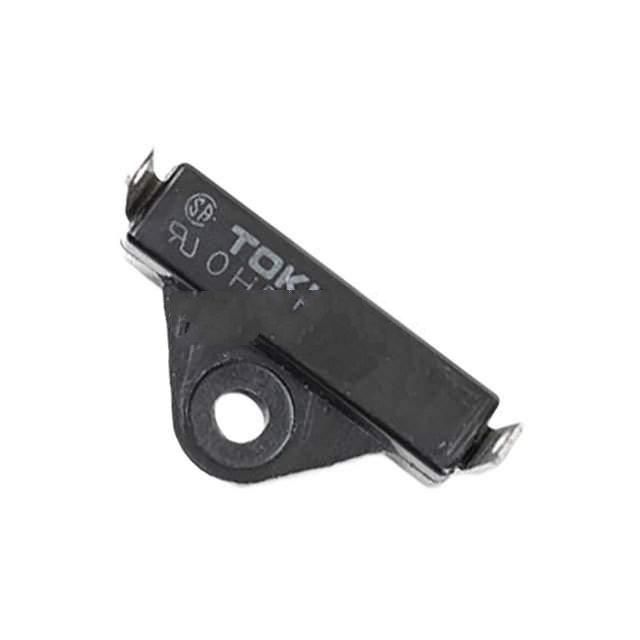
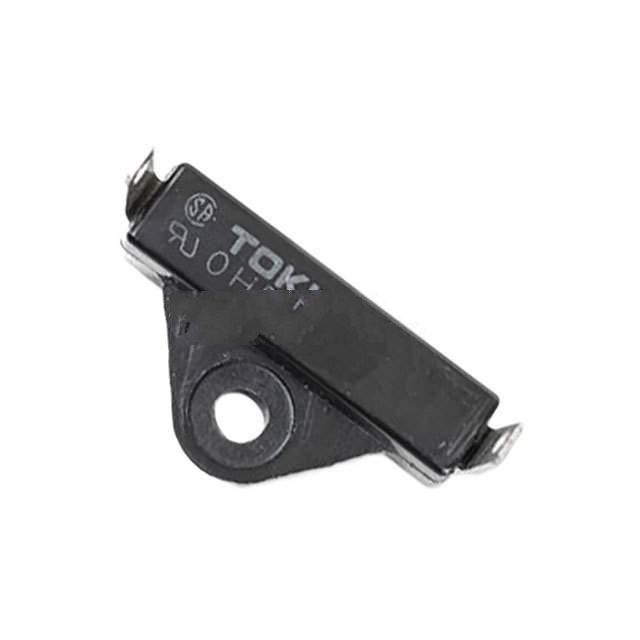
KEMET OHD3-120M

The picture is for reference only, please refer to the product specification
- OHD3-120M
- KEMET
- SENSTHERMOHD3 120C 6W MAKE
- Temperature Sensors - Thermostats - Mechanical
- OHD3-120M Datasheet
- Module
- Module
-
 Lead free / RoHS Compliant
 - 16889
- Spot Inventory / Athorized Dstributor / Factory Excess Stock
- 1 year quality assurance 》
- Click to get rates


What is OHD3-120M
KEMET Part Number OHD3-120M(Temperature Sensors - Thermostats - Mechanical), developed and manufactured by KEMET, distributed globally by Jinftry. We distribute various electronic components from world-renowned brands and provide one-stop services, making us a trusted global electronic component distributor.
OHD3-120M is one of the part numbers distributed by Jinftry, and you can learn about its specifications/configurations, package/case, Datasheet, and other information here. Electronic components are affected by supply and demand, and prices fluctuate frequently. If you have a demand, please do not hesitate to send us an RFQ or email us immediately [email protected] Please inquire about the real-time unit price, Data Code, Lead time, payment terms, and any other information you would like to know. We will do our best to provide you with a quotation and reply as soon as possible.
OHD3-120M Specifications
- Part NumberOHD3-120M
- CategoryTemperature Sensors - Thermostats - Mechanical
- ManufacturerKEMET
- DescriptionSENSTHERMOHD3 120C 6W MAKE
- PackageModule
- SeriesOHD?
- Mounting TypeChassis Mount
- Package / CaseModule
- CircuitSPST-NO
- Termination StyleSolder Lug
- Switching Temperature248°F (120°C)
- Current Rating - DC0.3A (100V)
- Current Rating - AC0.3A (100V)
Application of OHD3-120M
OHD3-120M Datasheet
OHD3-120M Datasheet , Module,OHD?,Chassis Mount,Module,SPST-NO,Solder Lug,248°F (120°C),0.3A (100V),0.3A (100V)
OHD3-120M Classification
Temperature Sensors - Thermostats - Mechanical
FAQ about Temperature Sensors - Thermostats - Mechanical
-
1. What temperature sensor does the thermostat use?
The thermostat mainly uses thermocouples and PT100 temperature sensors. Thermocouple sensors are usually packaged in a stainless steel shell, filled with thermal conductive materials and sealing materials. They are suitable for a variety of temperature measurement scenarios, have a fast response speed, and are suitable for medical, HVAC, refrigeration, environmental experiments and other fields. 1. The PT100 sensor is a high-precision temperature sensor, often used in precision thermostat equipment.
-
2. What are the 4 types of temperature sensors?
There are four main types of temperature sensors:
Thermocouple sensor: A thermocouple is a temperature sensing element that forms a closed loop through two conductors of different materials. When there is a temperature gradient at both ends, a current will flow through the loop, generating a thermoelectric potential signal, thereby measuring the temperature. Thermocouples have a wide temperature measurement range, but there are problems such as low sensitivity, low stability, and slow response speed.
Thermistor sensor: The main component of thermistor sensor is thermistor. When there is thermal radiation around the thermosensitive material, it will absorb the radiant heat, causing the material resistance to change. Thermistors are usually made of polymer or ceramic materials and have a nonlinear temperature-resistance relationship, which requires correction to correctly interpret the data. Thermistors are suitable for highly sensitive and small temperature measurement occasions and are inexpensive.
Resistance temperature detector (RTD): RTD usually uses metals such as platinum, copper or nickel. The resistance of these metals changes with temperature, has a large temperature coefficient and a fast response speed. RTD has a wide temperature measurement range, can resist thermal fatigue, and is suitable for precision measurement.
Integrated Circuit (IC) Temperature Sensor: IC temperature sensor is made of silicon semiconductor integration process, with the characteristics of single function, small temperature measurement error, low price, fast response speed, long transmission distance, etc. IC sensor is suitable for long-distance temperature measurement and control, does not require nonlinear calibration, and has simple peripheral circuit.
-
3. How does a thermostat sensor work?
The working principle of a thermostat sensor is to detect the ambient temperature and adjust the temperature accordingly to keep it constant. Thermostat sensors usually consist of two main parts: temperature detection circuit and temperature compensation for the detection circuit.
Working principle
Temperature detection: The core component inside the thermostat sensor is a resistor, whose resistance changes with the change of the measured ambient temperature. When the ambient temperature rises, the resistance of the resistor changes, and this change can be converted into an electrical signal through the circuit.
Signal processing: After the changing resistance value is processed by the circuit, a voltage signal related to temperature can be generated. This signal is amplified and processed, and finally outputs a current signal to control the temperature adjustment of the thermostat.
Types
There are two main types of thermostat sensors:
Thermal resistors: Thermistors are usually used to achieve temperature detection, and their resistance changes with temperature.
Thermocouples: They are composed of two metal wires of different materials, and obtain temperature information by measuring the potential difference between the two metals.
We are a professional PCB manufacturer who offers comprehensive PCB manufacturing services including: professional Ceramic PCB HDI PCB Heavy Copper PCB High-TG PCB High Speed PCB High Frequency PCB Metal Core PCB PCB fabrication and PCB assembly, providing fast turnaround prototypes for high-end products.



• Prompt Responsiveness
• Guaranteed Quality
• Global Access
• Competitive Market Price
• One-Stop support services of supply chain
Jinftry, Your most trustworthy component supplier, welcome to send us the inquiry, thank you!
Do you have any questions about OHD3-120M ?
Feel free to contact us: