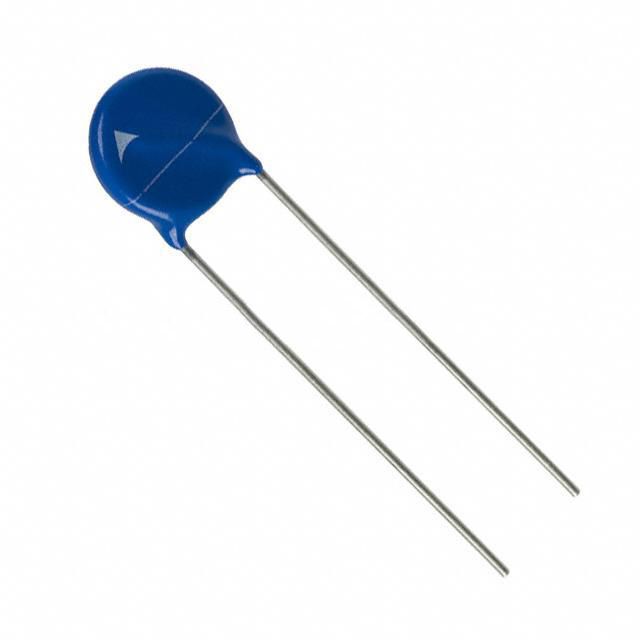
Littelfuse Inc. V320LU10P
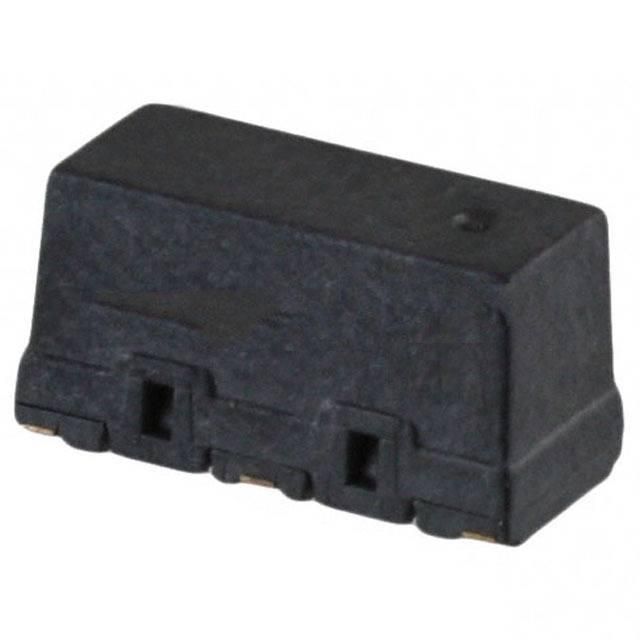
The picture is for reference only, please refer to the product specification
- V320LU10P
- Littelfuse Inc.
- VARISTOR 510V 2.5KA DISC 10MM
- TVS - Varistors, MOVs
- V320LU10P Datasheet
- Disc 10mm
- Disc 10mm
-
 Lead free / RoHS Compliant
 - 3741
- Spot Inventory / Athorized Dstributor / Factory Excess Stock
- 1 year quality assurance 》
- Click to get rates


What is V320LU10P
Littelfuse Inc. Part Number V320LU10P(TVS - Varistors, MOVs), developed and manufactured by Littelfuse Inc., distributed globally by Jinftry. We distribute various electronic components from world-renowned brands and provide one-stop services, making us a trusted global electronic component distributor.
V320LU10P is one of the part numbers distributed by Jinftry, and you can learn about its specifications/configurations, package/case, Datasheet, and other information here. Electronic components are affected by supply and demand, and prices fluctuate frequently. If you have a demand, please do not hesitate to send us an RFQ or email us immediately [email protected] Please inquire about the real-time unit price, Data Code, Lead time, payment terms, and any other information you would like to know. We will do our best to provide you with a quotation and reply as soon as possible.
V320LU10P Specifications
- Part NumberV320LU10P
- CategoryTVS - Varistors, MOVs
- ManufacturerLittelfuse Inc.
- DescriptionVARISTOR 510V 2.5KA DISC 10MM
- PackageDisc 10mm
- SeriesLU
- Operating Temperature-55°C ~ 85°C (TA)
- Mounting TypeThrough Hole
- Package / CaseDisc 10mm
- Number of Circuits1
- Capacitance @ Frequency170pF @ 1MHz
- Varistor Voltage (Typ)510V
- Current - Surge2.5kA
- Maximum DC Volts420V
- Varistor Voltage (Min)459V
- Varistor Voltage (Max)561V
- Maximum AC Volts320V
- Energy48J
Application of V320LU10P
V320LU10P Datasheet
V320LU10P Datasheet , Disc 10mm,LU,-55°C ~ 85°C (TA),Through Hole,Disc 10mm,1,170pF @ 1MHz,510V,2.5kA,420V,459V,561V,320V,48J
V320LU10P Classification
TVS - Varistors, MOVs
FAQ about TVS - Varistors, MOVs
-
1. What is the difference between TVS and varistors?
The main differences between TVS and varistors are their working principles, performance parameters, application scenarios, and prices.
Working Principle
TVS (Transient Voltage Suppressor): TVS forms a PN structure on a silicon-based material and uses the breakdown characteristics of the PN junction to achieve protection. When an overvoltage occurs in the circuit, the resistance value of the TVS changes rapidly, thereby protecting other components in the circuit.
Varistor: Varistors use the nonlinear resistance characteristics of materials such as zinc oxide to achieve overvoltage protection. When an overvoltage occurs in the circuit, the resistance value of the varistor also changes, thereby protecting the circuit.
Performance Parameters
Overvoltage resistance: TVS is usually more resistant to overvoltage than varistors and can withstand higher voltages and currents.
Response time: TVS usually has a shorter response time than varistors and can respond to overvoltage events in a shorter time.
Lifespan: TVS usually has a longer lifespan than varistors because the PN junction of TVS can self-recover after breakdown, while varistors usually break down after a breakdown.
-
2. What is the difference between varistors and MOVs?
There are some differences between varistors and MOVs (Metal Oxide Varistors) in terms of definition, characteristics, and applications.
Definition and Characteristics
Varistor (VDR/MOV): A varistor is a voltage-sensitive resistor whose resistance value changes with voltage. When an excessively high voltage appears in a circuit, the internal resistance of the varistor drops sharply and turns on quickly, protecting electronic components from surges. MOVs are usually made of zinc oxide and have the characteristics of large current flow, slow response speed, and large parasitic capacitance.
MOV: Specifically refers to metal oxide varistor, which is a type of varistor and is widely used in electronic circuits. Its characteristics include large current flow, slow response speed, and large parasitic capacitance.
-
3. What is the difference between TVS diodes and MOVs?
The main differences between TVS diodes and MOV varistors are the working principle, application scenarios and performance characteristics.
Working principle
T VS diode is a semiconductor device with nonlinear volt-ampere characteristics, and its working principle is based on the breakdown phenomenon of PN junction. When TVS diode is subjected to reverse transient high voltage, its impedance drops rapidly, absorbing most of the energy and clamping the voltage at a safe value, thereby protecting electronic components 12. TVS diode has a small leakage current before breakdown, and it behaves as a voltage regulator after breakdown, with a strong voltage clamping ability.
MOV varistor is a multi-layer structure made of zinc oxide material with a multi-grain structure, which absorbs surge current by changing the conduction resistance. When the voltage exceeds its varistor voltage, the resistance of MOV drops rapidly, shunting the current, thereby protecting the subsequent circuit 45. MOV has a higher clamping voltage when the current is too large, and a larger leakage current when the voltage is low.
We are a professional PCB manufacturer who offers comprehensive PCB manufacturing services including: professional Ceramic PCB HDI PCB Heavy Copper PCB High-TG PCB High Speed PCB High Frequency PCB Metal Core PCB PCB fabrication and PCB assembly, providing fast turnaround prototypes for high-end products.



• Prompt Responsiveness
• Guaranteed Quality
• Global Access
• Competitive Market Price
• One-Stop support services of supply chain
Jinftry, Your most trustworthy component supplier, welcome to send us the inquiry, thank you!
Do you have any questions about V320LU10P ?
Feel free to contact us: