
ES3B-M3/9AT vs ES3C-M3/9AT
| Part Number |

|
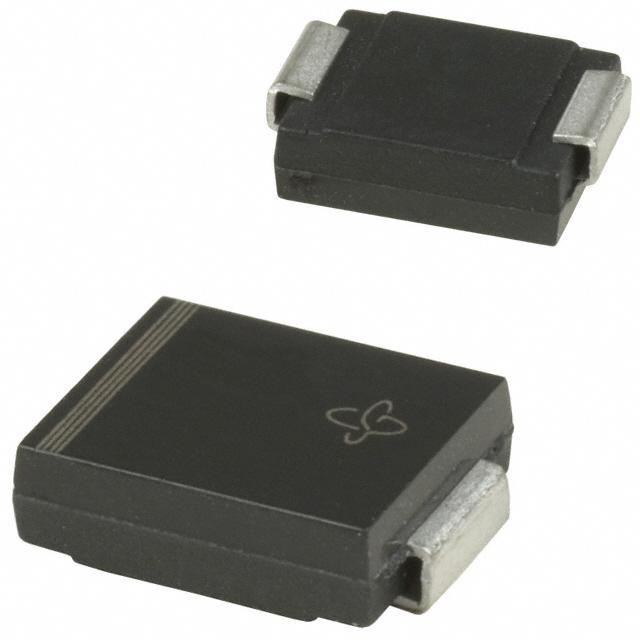
|
| Category | Diodes - Rectifiers - Single | Diodes - Rectifiers - Single |
| Manufacturer | Vishay Semiconductor - Diodes Division | Vishay Semiconductor - Diodes Division |
| Description | DIODE GEN PURP 100V 3A DO214AB | DIODE GEN PURP 150V 3A DO214AB |
| Package | Tape & Reel (TR) | Tape & Reel (TR) |
| Series | - | - |
| Mounting Type | Surface Mount | Surface Mount |
| Package / Case | DO-214AB, SMC | DO-214AB, SMC |
| Supplier Device Package | DO-214AB (SMC) | DO-214AB (SMC) |
| Diode Type | Standard | Standard |
| Current - Average Rectified (Io) | 3A | 3A |
| Voltage - Forward (Vf) (Max) @ If | 900 mV @ 3 A | 900 mV @ 3 A |
| Current - Reverse Leakage @ Vr | 10 µA @ 100 V | 10 µA @ 150 V |
| Capacitance @ Vr, F | 45pF @ 4V, 1MHz | 45pF @ 4V, 1MHz |
| Voltage - DC Reverse (Vr) (Max) | 100 V | 150 V |
| Speed | Fast Recovery =< 500ns, > 200mA (Io) | Fast Recovery =< 500ns, > 200mA (Io) |
| Reverse Recovery Time (trr) | 30 ns | 30 ns |
| Operating Temperature - Junction | -55°C ~ 150°C | -55°C ~ 150°C |
-
1. What is forward voltage drop?
Forward voltage drop refers to the voltage drop generated when the current passes through a diode when it is conducting. The forward voltage drop of silicon rectifier diodes is usually around 0.7V, while the forward voltage drop of Schottky diodes is usually lower, between 0.2V and 0.3V.
-
2. What is the difference between a single rectifier diode and a bridge rectifier?
A single rectifier diode can only rectify the positive half wave of AC power (half wave rectification), while a bridge rectifier composed of four diodes can rectify the positive and negative half waves of AC power (full wave rectification), with higher efficiency and smoother output.
-
3. Can a single rectifier diode be used for high-frequency applications?
Traditional silicon rectifier diodes are not suitable for high-frequency applications because their reverse recovery time is relatively long. For high-frequency applications, fast recovery diodes or Schottky diodes are typically used to reduce switching losses and improve efficiency.
-
4. How to determine if the rectifier diode is damaged?
Use a multimeter to measure the forward and reverse resistance of a diode. If the diode exhibits low impedance or high impedance in both directions, it may have been damaged. Under normal circumstances, there should be low impedance when conducting in the forward direction, and high impedance when conducting in the reverse direction.
