
MAX40024ANL+ vs MCP6292-H/MS
| Part Number |
|
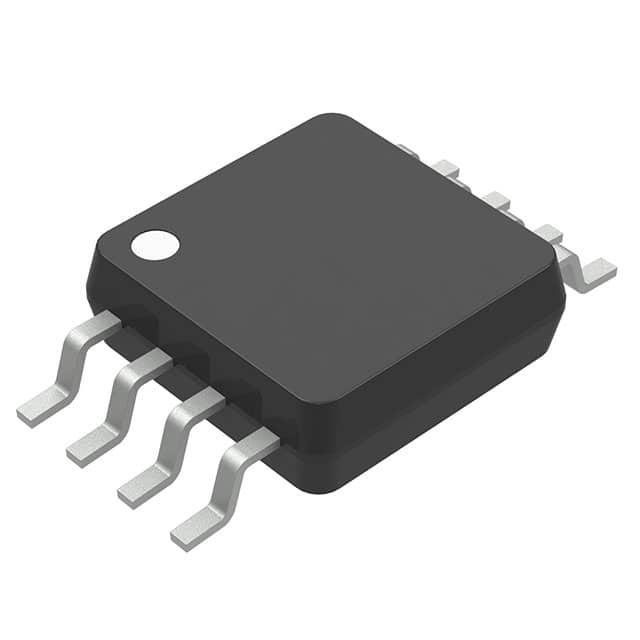
|
| Category | Linear - Amplifiers - Instrumentation, OP Amps, Buffer Amps | Linear - Amplifiers - Instrumentation, OP Amps, Buffer Amps |
| Manufacturer | Maxim Integrated | Microchip Technology |
| Description | IC INST AMP PROG GAIN WLP | IC OPAMP GP 2 CIRCUIT 8MSOP |
| Package | Tape & Reel (TR) | Tape & Reel (TR) |
| Series | - | - |
| Operating Temperature | -40°C ~ 125°C | -40°C ~ 150°C (TA) |
| Mounting Type | Surface Mount | Surface Mount |
| Package / Case | 9-XFBGA, WLBGA | 8-TSSOP, 8-MSOP (0.118\", 3.00mm Width) |
| Supplier Device Package | 9-WLP (1.23x1.23) | 8-MSOP |
| Current - Supply | 17µA | 1mA (x2 Channels) |
| Output Type | Rail-to-Rail | Rail-to-Rail |
| Number of Circuits | 2 | 2 |
| Voltage - Supply, Single/Dual (±) | 1.6V ~ 3.6V | 2.4V ~ 6V |
| Current - Output / Channel | 10 mA | 25 mA |
| -3db Bandwidth | - | - |
| Amplifier Type | General Purpose | General Purpose |
| Current - Input Bias | 0.1 pA | 1 pA |
| Voltage - Input Offset | 100 µV | 3 mV |
| Slew Rate | 0.02V/µs | 7V/µs |
| Gain Bandwidth Product | 80 kHz | 10 MHz |
-
1. What is an instrumentation amplifier and what is it mainly used for?
An instrumentation amplifier is a high-precision amplifier designed to amplify low-level differential signals with high input impedance and high common mode rejection ratio (CMRR), and is commonly used in scenarios such as medical equipment, sensor signal processing, and industrial measurements.
-
2. What is Common Mode Rejection Ratio (CMRR) and why is it important for instrumentation amplifiers?
CMRR indicates an instrumentation amplifier's ability to suppress common mode signals, with higher values being better. A high CMRR is especially important in noisy environments to ensure that the amplifier primarily amplifies differential signals and is not affected by common mode interference.
-
3. How to achieve high accuracy and low drift in instrumentation amplifiers?
Select an amplifier with low bias current, low offset voltage, and low noise, and reduce the effect of temperature drift on accuracy through a stable power supply and proper temperature compensation circuit design.
-
4. How to choose the right operational amplifier?
Parameters such as input offset voltage, input bias current, gain bandwidth product, slew rate, noise characteristics, supply voltage, and power consumption should be considered when selecting an operational amplifier to meet the needs of a particular application.
