
MCP6292-H/MS vs MAX40024ANL+
| Part Number |
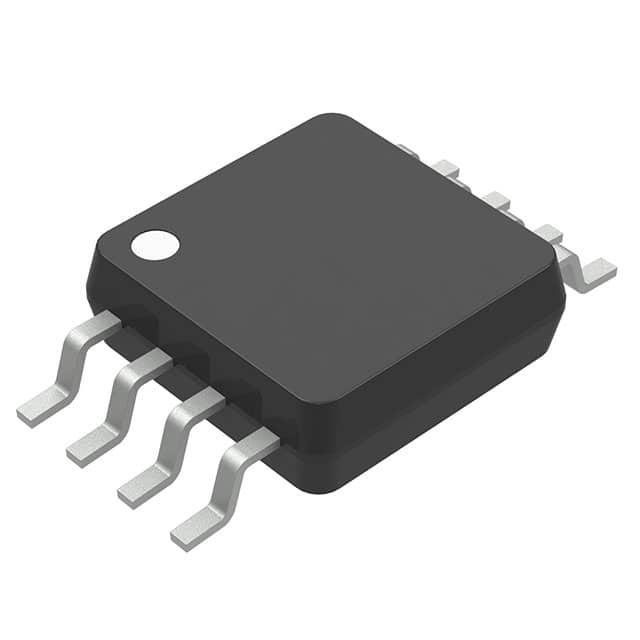
|
|
| Category | Linear - Amplifiers - Instrumentation, OP Amps, Buffer Amps | Linear - Amplifiers - Instrumentation, OP Amps, Buffer Amps |
| Manufacturer | Microchip Technology | Maxim Integrated |
| Description | IC OPAMP GP 2 CIRCUIT 8MSOP | IC INST AMP PROG GAIN WLP |
| Package | Tape & Reel (TR) | Tape & Reel (TR) |
| Series | - | - |
| Operating Temperature | -40°C ~ 150°C (TA) | -40°C ~ 125°C |
| Mounting Type | Surface Mount | Surface Mount |
| Package / Case | 8-TSSOP, 8-MSOP (0.118\", 3.00mm Width) | 9-XFBGA, WLBGA |
| Supplier Device Package | 8-MSOP | 9-WLP (1.23x1.23) |
| Current - Supply | 1mA (x2 Channels) | 17µA |
| Output Type | Rail-to-Rail | Rail-to-Rail |
| Number of Circuits | 2 | 2 |
| Voltage - Supply, Single/Dual (±) | 2.4V ~ 6V | 1.6V ~ 3.6V |
| Current - Output / Channel | 25 mA | 10 mA |
| -3db Bandwidth | - | - |
| Amplifier Type | General Purpose | General Purpose |
| Current - Input Bias | 1 pA | 0.1 pA |
| Voltage - Input Offset | 3 mV | 100 µV |
| Slew Rate | 7V/µs | 0.02V/µs |
| Gain Bandwidth Product | 10 MHz | 80 kHz |
-
1. How do instrumentation amplifiers handle sensor signals?
Instrumentation amplifiers are used to extract low-level signals from sensors (e.g. thermocouples, pressure sensors) to provide high-precision amplification, and are particularly suited to applications that require accurate reading and amplification of weak signals, such as medical and industrial monitoring.
-
2. How is the noise performance of instrumentation amplifiers optimized?
Select low-noise amplifiers in your design and use shielding, filters, and precise power management to minimize external noise. High-quality resistors should be used wherever possible and PCB layout should be optimized to reduce noise coupling.
-
3. How to choose the right operational amplifier?
Parameters such as input offset voltage, input bias current, gain bandwidth product, slew rate, noise characteristics, supply voltage, and power consumption should be considered when selecting an operational amplifier to meet the needs of a particular application.
-
4. What is a rail-to-rail operational amplifier and what are its advantages?
Rail-to-rail op amps are capable of extending the output voltage range to the limit of the supply voltage (i.e., the “rail”), allowing them to handle large dynamic range signals even at low supply voltages, making them particularly suitable for low-voltage power supply systems and portable devices.
